Why Documenting Inconclusive Decisions Pays Off Over Time
Skipping inconclusive decisions costs organizations millions in repeated work.
Every time a question your organization already looked into comes up again, you pay to answer it twice. The fix is simple in principle: write down what you found, what you didn't, and why you stopped — even when you never reached a firm answer.
Organizations lose money on wrong decisions. But the quieter drain is decisions that never got resolved at all. An inconclusive decision isn't a failure to decide. It's a judgment made with thin evidence, a temporary path, or a question set aside until conditions change — that nobody goes back to check. Each time the same question comes up, in a different quarter or a different part of the business, everyone starts from scratch. Nobody saved what was known, what wasn't, or why the team stopped short of an answer.
This is a normal feature of how decisions get made in large organizations. People work within limits — limited time, limited information, limited mental bandwidth. That's normal 2025 AI Agent Index. Mental shortcuts and blind spots affect individuals, groups, and whole organizations at once. So the barriers to learning from a past decision are built in from the start 2025 AI Agent Index. Knowledge also travels poorly between teams and levels. That means the organization misses gains it already earned once.
The scale of the gap shows up in the numbers. This is a process problem, not a competence one. Process problems can be fixed in ways skill gaps can't 2025 AI Agent Index Harvard Business Publishing. Companies that carry out decisions well post total shareholder returns nearly six points higher than peers, according to research cited by Harvard Business Impact 2025 AI Agent Index Harvard Business Review / Blenko et al.. Six points, compounded over years, is a large and lasting gap 2025 AI Agent Index Harvard Business Review / Blenko et al.. It's the difference between a company that builds on its own thinking and one that keeps paying to relearn the same lesson.
What organizations record versus what they actually need to record
Most record-keeping systems were built to answer one question: what happened. They were never built to answer why this path was chosen given what the team knew at the time. That gap was tolerable when people made most calls and could later explain themselves. It's different now. Software agents — programs that carry out decisions automatically — work at a speed no human can review in real time. They run inside systems that were never built to record how a decision was made, on what information, or based on what past reasoning.
A complete decision record needs several things a typical database log doesn't capture. It needs the information that was actually available at the moment of the decision — not a reconstruction put together afterward. It needs the rules and thresholds behind the outcome. Where automated tools were involved, it needs the confidence levels and logic behind their output. It also needs the human steps: who reviewed, who overrode, who approved, and when. Not "approval was obtained," but "approval was obtained verbally by J. Smith from VP Williams on 2025-10-31 at 14:30, referenced in email thread ETH-44821." That level of detail is what makes a record usable months later by someone who wasn't in the room.
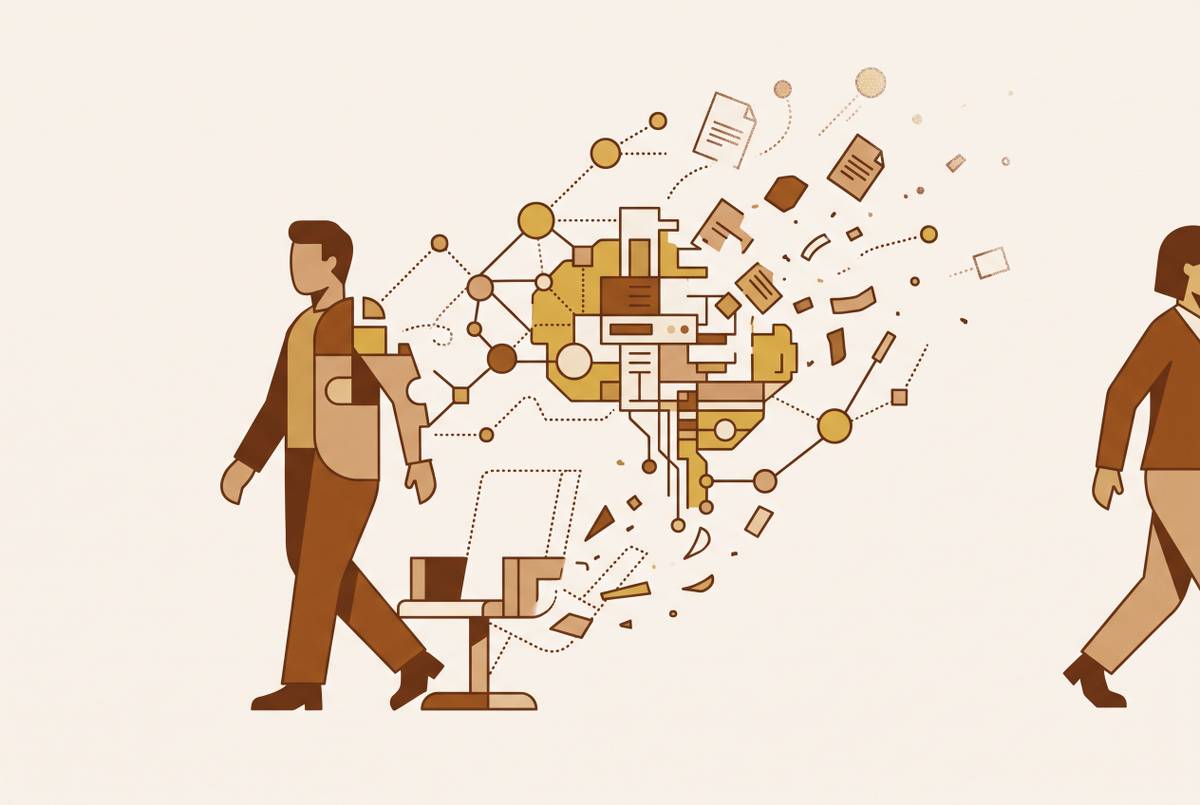
Inconclusive decisions need something extra that outcome records never capture. You need the reasoning behind the delay, the assumptions nobody could verify, and the exact conditions under which the question should be reopened. The judgment call that pulled all the pieces together lives only inside one person's head. When that person changes roles, it's gone.
It would be convenient to blame bad data: 5% of employees say poor data quality blocks good decisions Harvard Business Publishing. But 57% point to slow, top-heavy process, and 17% cite fear of being wrong Harvard Business Publishing. Data quality is a real issue. But it's a smaller issue than the culture and documentation gap. A decision often draws on data from three separate systems. None of those systems records how they relate to each other. The person who connected the dots holds that link only in memory.
How the absence of recorded reasoning compounds every time the question comes back
Most important business questions aren't one-time events. Vendor selection, rules about regulations, risk limits, staffing models, pricing strategy — these come up again and again. They hit different teams across different years, and those teams often don't talk to each other. Without a record, each recurrence resets the clock.
The cost doesn't add up in a straight line. It grows with how often the question comes back, how many teams hit it on their own, and what each round of re-investigation costs. Direct costs show up as staff hours re-gathering evidence and re-engaging outside advisors. Indirect costs show up as delay, when a decision is put off again for lack of context already assembled once but never saved. Risk costs appear when different teams reach different answers to the same question. That creates problems with regulators and leads to customers being treated differently. There's also a newer cost specific to automated tools: software agents without recorded past reasoning hit the same gap — they can't retrieve thinking that was never written down.
Mental shortcuts don't fade with repetition. They affect individuals, groups, and organizations all at once. Each undocumented recurrence brings those barriers back fresh, with no correction from a recorded prior attempt. Teams end up re-arguing questions that were, in some meaningful sense, already answered. Tellingly, disagreements over decisions account for 41% of workplace conflict — partly because teams argue over ground a predecessor already covered but never wrote down.
This is as much a governance failure as a knowledge management one. MIT's Project NANDA found that 95% of enterprise pilots of generative AI — AI tools that produce text, decisions, or other outputs — produced zero measurable return on investment. A large part of that was traced to gaps in data readiness and oversight. Undocumented reasoning is a structural weakness that shows up on the balance sheet.
Why inconclusive decisions are harder to document than concluded ones
Concluded decisions come with a built-in record. There's an action and a measurable outcome. That gives people reason to reconstruct the reasoning later. Inconclusive decisions have none of that. There's no action to pin reasoning to, no outcome to measure, and no natural moment prompting anyone to write down what was considered.
The mental barriers here are specific. The way a question is framed shapes what people think is worth writing down. "We don't know yet" usually doesn't feel like a decision at all. Fear of admitting failure makes it worse. Saying that real effort produced no firm answer can feel like confessing inadequacy, not preserving knowledge. The fear runs deeper than pride, too. Employees cite lack of diverse or critical thinking (21%) and fear of being wrong (17%) as barriers — both are worse when the decision is explicitly unresolved.
How organizations are structured makes it worse. Reviews of organizational structure consistently find that knowledge flows poorly between teams and levels. No job description says "document what we failed to conclude and why." The result is a bias in what organizations remember. Confident, concluded decisions get preserved. The uncertain, deferred ones — the ones most likely to come up again — are least likely to survive. This is a design problem. Nobody built a field for "what we would have needed to know." Nobody owns the trigger to reopen it. Nothing alerts anyone when the question surfaces elsewhere.
What a useful record of an inconclusive decision contains
A useful record isn't a narrative written for posterity. It's a structured set of fields. It's built so a future decision-maker with zero context can look it up and actually use what's inside.
At minimum, it needs the question as framed at the time — not a tidied-up later paraphrase. It needs the evidence that was available then: sources, quality, known gaps. It needs the options considered, including those ruled out and why. It needs the unverified assumptions the team made, stated clearly rather than buried in notes. It needs the conclusion itself, tagged by status: firm, temporary, deferred, or abandoned. It needs the conditions that would change the conclusion — the specific evidence or event that should trigger reopening it. It needs a named individual accountable, not a role or department — someone who can be found and asked. And it needs a cost estimate: what staying undecided costs over the next quarter or year.
The "what would change the conclusion" field is most often left out. Yet it's arguably the most valuable line in the record. Without it, a deferred decision is just a dead end. With it, the deferred decision becomes a standing instruction your organization is waiting to act on once conditions shift.
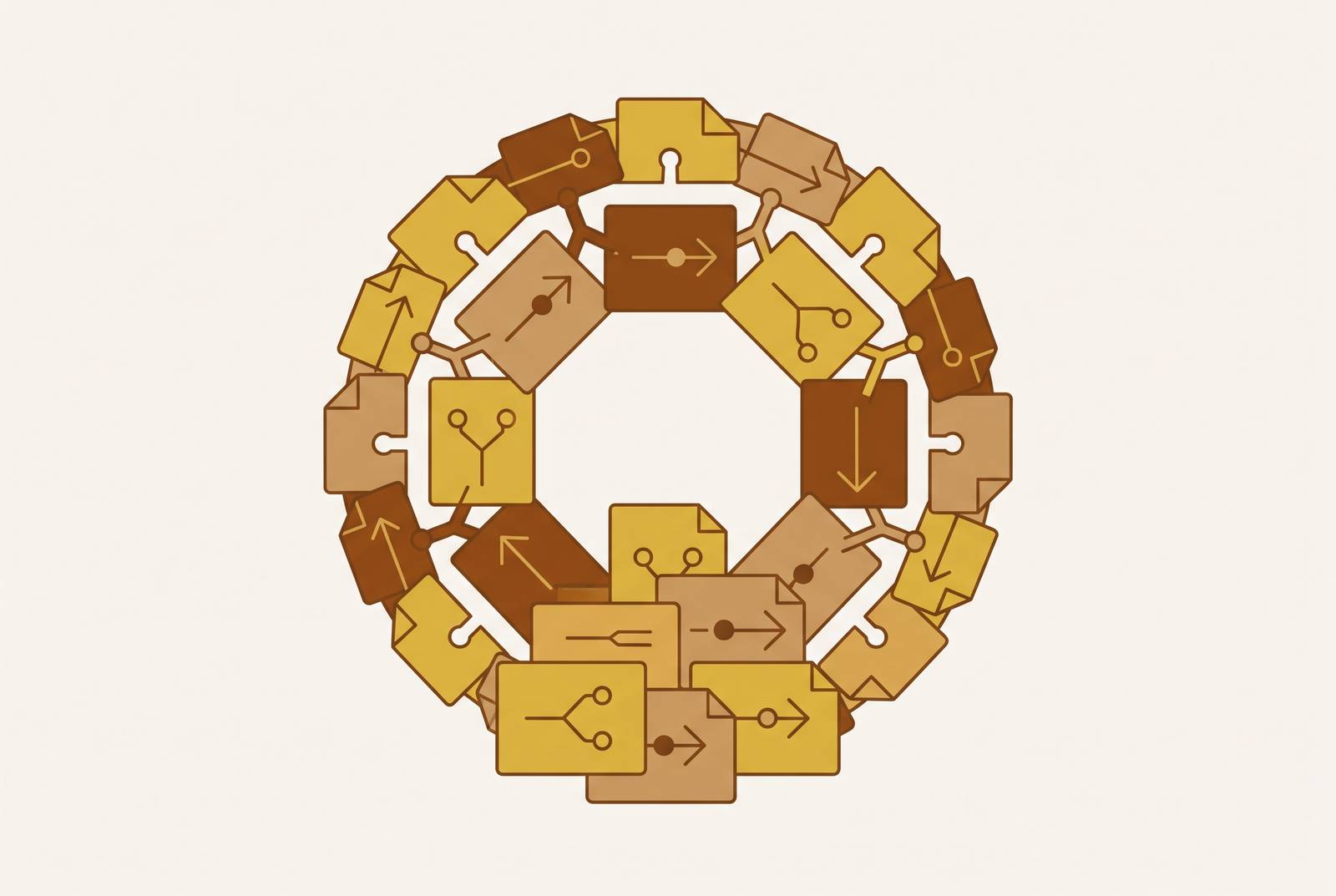
Failed and inconclusive results belong right alongside the successful ones. A record that only preserves wins badly undersells the actual shape of a problem. When properly connected, these records let your organization search its own history: every decision where assumption X was controlling, and how each turned out. That turns a pile of individual notes into a real knowledge base. A culture where people feel safe — and where the decision feels important — improves process quality, which predicts how well decisions turn out. Documentation is part of what makes the process work.
The oversight structure that makes documentation stick
Documentation without oversight goes stale fast. Without a named owner, a defined review trigger, and a system that surfaces past records when similar decisions come up again, even the best-written record sits unread.
Ownership has to be specific. Every inconclusive decision needs an actual person — not a team or department — responsible for revisiting it when conditions change. The person who approves a decision within set limits, and the person who handles exceptions, must be named before a process runs, not scrambled together afterward. The same applies to documentation: who writes the record is settled before the process starts.
The adoption numbers show exactly where this breaks in practice. 62% of organizations use software agents in some form, but only 23% have rolled out such a system across the whole enterprise, with the oversight gap cited most often as the ceiling 2025 AI Agent Index. Roughly half of large enterprises now have a dedicated AI oversight committee. But a committee's existence doesn't guarantee that inconclusive AI-assisted decisions get documented any better than inconclusive human ones always have. An oversight board authorized to approve, pause, or reject deployments needs a matching requirement: automated tools must record inconclusive outputs, not just successful ones.
One useful practice is regular decision replay exercises — reconstructing a past outcome using only the evidence actually preserved. That exposes documentation gaps before a regulator or partner finds them. It's an operational habit, not a compliance checkbox. The same discipline should check whether automated tools' decisions — especially the unresolved ones — are getting recorded. The 2025 AI Agent Index found that only 20 of 30 audited agents documented stop mechanisms. That same audit discipline should apply to whether their decisions, including inconclusive ones, are being recorded.
How documented inconclusive decisions build up into an organizational asset
The shift here isn't abstract. A structured, searchable record of past inconclusive decisions changes the real economics of the next investigation. Evidence already gathered doesn't need re-gathering. Assumptions already tested and discarded don't need retesting. Conditions that blocked a conclusion before are visible as open questions rather than forgotten ones.
Finding a relevant past decision becomes a simple search: find similar past decisions and summarize how they turned out. That's only possible if the inconclusive results were written down next to the concluded ones. A knowledge base built only from successes badly underrepresents the actual shape of the problem. Policy impact analysis becomes possible too. When a policy changes, your organization can pull every past decision governed by that assumption and reopen those that need it — but only if the assumption was written down the first time.
The value builds across three dimensions. Over time, each documented past decision shortens the next investigation into the same question. Across teams, a provisional conclusion in one part of the business becomes available to another team facing the same question — without a second investigation from zero. Across handoffs between people and automated tools, when a tool surfaces a question needing human judgment, recorded past reasoning lets the reviewer weigh its recommendation against real institutional history instead of guessing cold.
Organizational learning is supposed to drive innovation, adaptation, and competitive advantage — but only when knowledge actually flows between teams and levels. Documented inconclusive decisions are the mechanism that makes that flow possible. They're not a nice extra. New tools and automated systems can draw on a company's accumulated reasoning instead of rebuilding it at every deployment — but only if that reasoning was recorded somewhere reachable. The share of jobs listing decision-making as a required skill grew from 6% to 34% over roughly six decades ending in 2018. Documenting inconclusive decisions is one of the few ways an organization builds that skill over time, instead of burning it fresh on the same recurring problems.
Starting the practice: one workflow, one owner, one measurable outcome
Launching decision documentation as a sweeping, cross-team initiative before proving it works anywhere tends to fail. It looks ambitious on a slide. But it collapses once someone asks who's responsible for updating it. The better entry point is narrower: pick one named, recurring decision with a real, calculable cost to redoing it, and build the practice there.
The right starting workflow has a few clear traits. It recurs often enough that the pain is visible within a quarter, not a year. It has a single, identifiable owner who can take responsibility without a turf debate. And it has an easily measured cost of re-investigation, so its value appears in a number leadership can see. Get that loop working. Prove the hours saved or risk avoided. The case for expanding makes itself. Nobody has to be persuaded by an argument at that point. They just have to look at what got saved the second time the question came up.