How Professional Services Firms Keep Knowledge When Partners Retire
Firms lose partner judgment when seniors retire unless they record reasoning as work happens.
When a senior partner retires, the firm keeps the files but loses the thinking behind them. The best fix is to record reasoning as you go. Don't wait until someone is on their way out.
An associate pulls every document in the file. That means engagement letters, billing history, and correspondence going back a decade. Somewhere in year three, the retiring partner cut that client a break on fees. That concession bought ten years of loyalty. It brought a referral to two other clients. And it held the relationship together through a rocky engagement in year seven. None of that reasoning sits in any engagement letter. The documents stayed. The judgment left.
This is what firms actually lose when a senior partner retires. Firms rarely lose paperwork. They lose the layer of interpretation that made the paperwork mean something. That includes private understanding of what mattered to this client, which risks were worth taking, and which relationships needed careful handling. Professional services firms have run for decades on an arrangement where senior partners carry the firm's memory. Client history, referral networks, and the reasoning behind hundreds of small decisions all live in partners' heads.
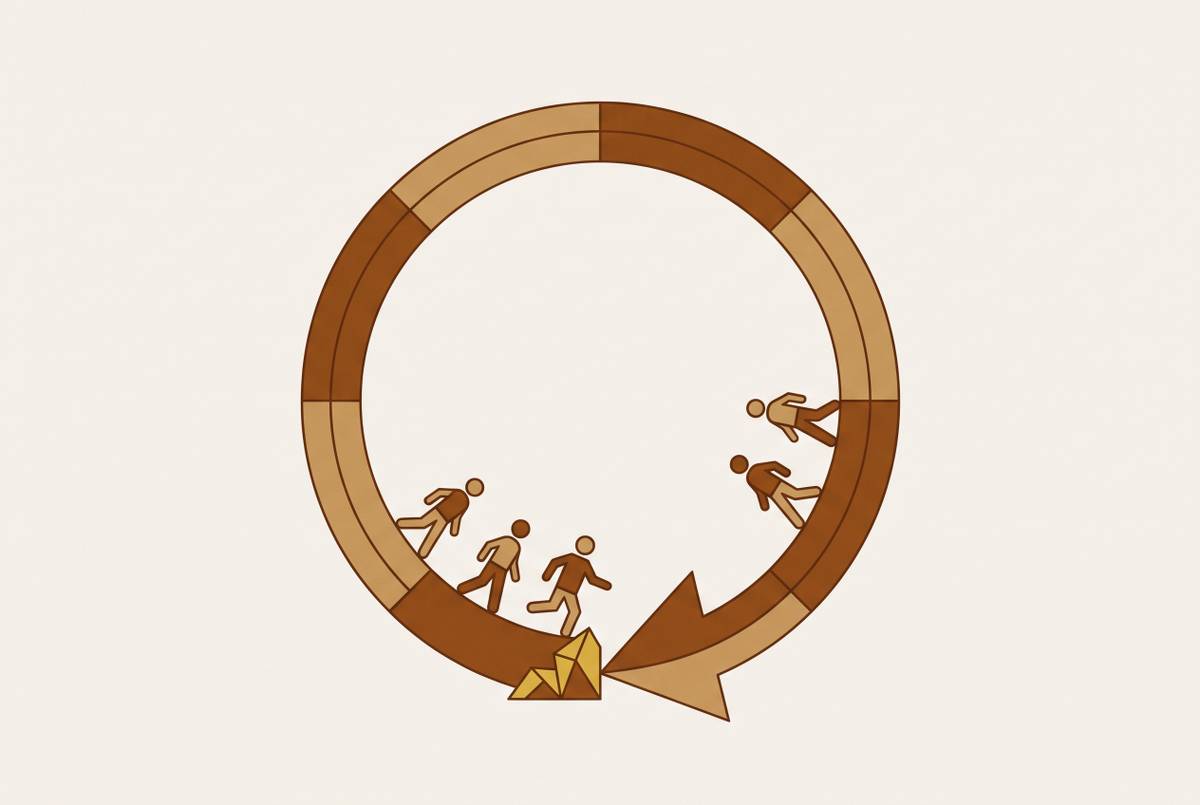
That arrangement has a built-in flaw. It is a single point of failure with an expiration date. You cannot search a retired partner's memory. You cannot back it up. Handing a successor a folder transfers files, not the reasoning that gave those files meaning. The problem does not announce itself until the day a client asks a question nobody left behind can answer.
Why this is urgent now, not eventually
This is not a slow-moving risk you can plan around at your leisure. Professional accounting student enrolments fell over the five years between 2017 and 2022. That decline landed at the exact moment the largest cohort of experienced partners started heading for the exit.
Two trends are converging at once. A firm that treats knowledge transfer as something to figure out eventually is betting against a labour pipeline that is already working against it. The firms that will struggle most are the ones that discover this collision only after a senior partner has already left and taken the context with them. The window to act runs on the same clock as the retirements themselves, and that clock is already running.
Why standard handover checklists are not enough
Most firms are not doing nothing. A client who never meets their new partner before the old one leaves is a client at real risk of walking. These tools solve a real problem. They are just not the problem that matters most.
One practitioner's standard for a good transition is that nobody should notice when the retiring partner actually leaves. That is the right goal. But it says nothing about how the successor gets the context needed to hit it. A smooth handoff meeting can introduce a new partner to a client without transferring a single piece of reasoning from the old relationship.
None of that reasoning lives in a client file. If nobody records it on purpose, it disappears the day the partner stops coming into the office.
There is also a cultural problem working against even a well-built checklist. Senior partners often built their value partly by being the person who knew things others did not. Asking a partner to hand that edge over freely runs against the habit that got them there. The system is supposed to benefit when knowledge moves from one generation to the next. But that same system spent decades rewarding people for holding onto it.
Timing makes it worse. A process built to start early enough to capture judgment looks very different from a checklist assembled in the final six months before someone leaves.
What firms that treat knowledge as infrastructure do differently
Some firms hold onto partner judgment by treating knowledge the way they treat any other piece of infrastructure. They build it and maintain it continuously. They do not assemble it the moment someone announces a retirement date. Contributing to that store of knowledge becomes a normal part of the job, not a favour a retiring partner does on the way out.
The key shift is about timing. Instead of trying to pull thirty years of judgment from a partner who has already mentally checked out, these firms capture that judgment as they go. They do it at the close of each matter and at each big decision point, while the reasoning is still fresh.
Every case management system already has a notes field. Most firms let it sit mostly empty. Firms that make knowledge transfer work require that field to get used. Three lines at the close of every matter: what the client actually cared about, why one option got chosen over another, and what could put the relationship at risk down the road. Three lines, repeated across every matter and every year, builds into a body of material a successor can actually work from.
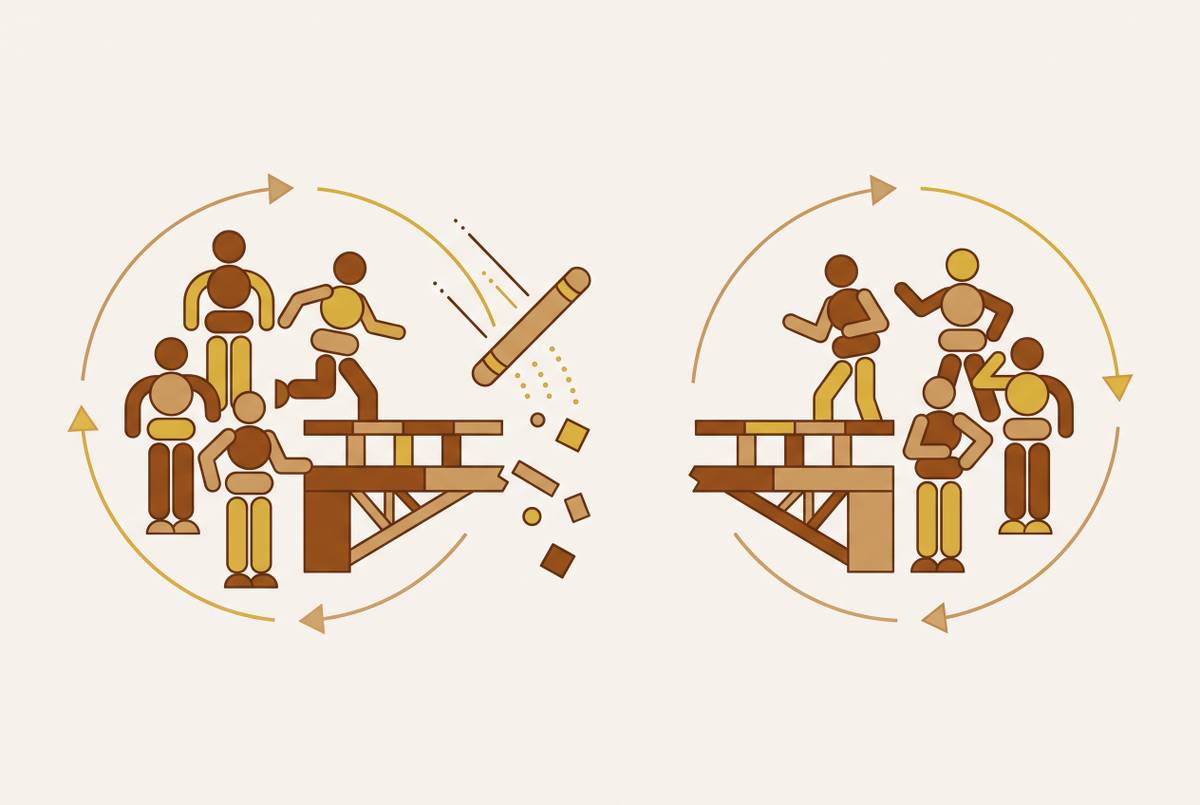
The contrast between the two approaches is plain. A firm where senior partners carry all the knowledge has a single point of failure. Nobody can search what any one person knows. And a retirement date is already on the calendar. A firm that treats knowledge as infrastructure spreads that function across people, process, and systems. No single departure can take it all down at once.
Connecting scattered records so they tell a coherent story
Firms that try to build this kind of infrastructure usually run into a structural problem early on. A partner's judgment about any given client does not come from one record. It comes from several. And those records rarely talk to each other. The engagement file lives in one system. Billing history lives in another. Relationship notes live somewhere else. With four systems and no connection between them, a partner's judgment is what used to hold them together.
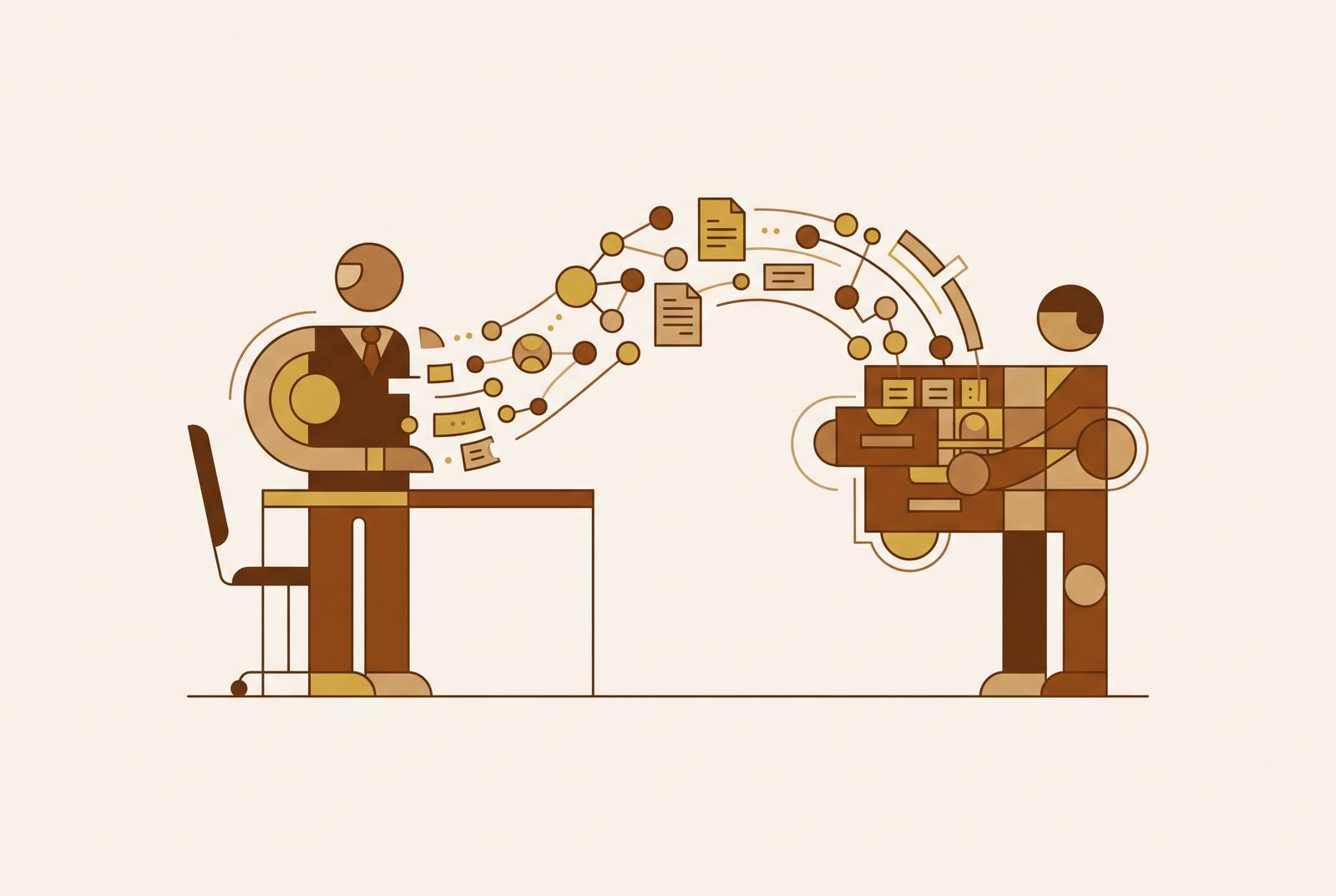
This is where linked data — sometimes called a context graph, meaning a map that shows how separate records relate to each other — changes what firms can actually capture. It connects what those separate records mean for the same client and the same piece of work. Information that technically exists but sits out of reach becomes something you, or an AI system working on your behalf, can actually use.
This is the thinking behind AI platforms built for professional services. The goal is an intelligence layer that understands how pieces connect across systems. It links engagement history, billing records, and correspondence by what they mean, not just by a shared ID number in a database.
One detail matters for firms thinking long-term. These platforms work best when they are not locked to a single AI model. A new model can pick up where the old one left off. It can use what the firm already knows, instead of forcing the firm to rebuild its knowledge base from scratch every time the technology changes.
Recording why a decision was made, not just what was decided
Connecting the data is only half the job. You also need to capture not just what got decided, but why. What evidence did the partner weigh? What options got considered and ruled out? What assumptions sat underneath the final call? A successor who inherits a conclusion without that reasoning has a fact without the understanding needed to apply it to the next, slightly different situation.
A standard audit log records what data someone accessed and when. That is not the same as recording why they accessed it and what they decided as a result. Knowing that a partner cut a client's fee by a certain amount is not the same as understanding that the concession bought a decade of loyalty afterward. One is a fact. The other is the judgment that makes the fact useful.
Some AI platforms use structured records — called decision records — that connect several things together. They capture the evidence considered, the recommendation that came out of it, the human reasoning behind the final call, the approvals involved, the action taken, and the outcome. That includes outcomes that failed or never resolved clearly. People can add corrections and explain exceptions when the usual pattern does not apply. The system also checks whether conditions have changed before it reuses an old lesson on a new situation.
What makes such a record useful to a successor is a reconstruction of how the partner actually thought through the problem. What did they weigh most heavily? What did they watch for? Where did they expect things to go wrong? Today, that kind of handover only happens when a retiring and incoming partner have enough overlap time together, and when the retiring partner is willing to sit down and walk through it. A structured record makes that kind of transfer possible even without the overlap.
The firms getting this right use capture methods matched to what each workflow actually produces, rather than applying one approach to everything.
None of this replaces human judgment at the moments where it matters most. That means high-stakes calls, decisions where the system has low confidence, and actions that are hard to undo. The goal is to make the reasoning behind that judgment clear to the next person who has to use it, without taking judgment out of the process.
The governance questions firms must settle before deploying any of this
None of the capability described above does any good until firms settle a handful of governance questions first. Who can access what data? What is an AI system allowed to do with it? What gets audited? How do partner transitions get handled legally? These questions are what make firms comfortable connecting sensitive client data to an AI system.
Reading across siloed client data and changing the records in those systems are two different kinds of access. They call for two different levels of permission. Settling that distinction early keeps the rollout from stalling on fights over access later.
The legal side carries real weight too. Next-Up's analysis of later-career programmes found that transitions need to be handled consistently and transparently across the firm. Treating senior partners inconsistently, or without a clear and visible process, opens up legal exposure under the Equality Act 2010, which covers partners and LLP members the same way it covers employees. That has a direct bearing on how a firm frames any knowledge capture programme. The safer, more lasting approach frames the programme around workflow continuity and client service. Keep it open to partners at every career stage, rather than switching it on only when someone announces they are leaving.
The technical controls matter just as much as the legal framing. You need role-based access that can be set per team. You need approval gates before anything significant happens. You need a clear inventory of what AI tools exist and what they can touch. You need logs that track what happened and why, ongoing monitoring, and the ability to pause or remove access immediately. These are not extras bolted on after the fact. They are the foundation that gives a firm the confidence to connect its most sensitive client data to an AI system.
Deployment needs vary by firm too. Settling these questions up front is the work that makes the rest of the system usable.
Where to start: one workflow, one owner, one measurable outcome
Firms that try to solve this problem everywhere at once tend to stall out before they finish. The ones that make real progress start with one workflow. They name one person accountable for it. And they agree on one measurable outcome before they do anything else.
The right place to start is wherever the loss of judgment is already visible and already costing something. That might be a practice area with a senior retirement coming up soon. It might be a client relationship where too much risk sits with one person. Or it might be a recurring decision that currently lives only in one partner's head. That is where the cost of doing nothing is already visible, which makes it the easiest place to prove the value of doing something different.
Before deploying anything, get a baseline. What does the successor currently know? What does the client currently expect? What would a genuinely successful transition look like, in terms you can actually measure? Every result afterward gets compared against that specific baseline, not against a vague feeling of improvement.
It helps to start with a system that surfaces information and flags what is missing, before giving it any authority to act on its own. A platform that shows connected context can prove its value well before a firm lets it take action without a person checking first. Value needs to be visible before the scope gets bigger.
The cost of waiting deserves the same scrutiny as the cost of acting. A client relationship that falls apart after a badly handled transition is hard to catch early and hard to undo once it happens. Firms often do not realise they have lost a client until the relationship is already gone. That asymmetry — slow to detect and hard to reverse — is the argument for investing early rather than waiting for a cleaner moment that never quite arrives.
The firms that keep this kind of investment going over years are the ones that stay honest about the numbers. What was the baseline? What changed afterward? What caused the change? Keep estimates separate from what you actually observed. Keep time saved separate from money saved. That discipline — measuring honestly and refusing to round up the results — is what separates firms that actually hold onto what their retiring partners knew from firms that only announced they would.